
How High-Chromium Cast Iron (Cr26) Extends Twin-Shaft Mixer Liner Lifespan
Discover why Cr26 high-chromium cast iron is the global industry standard for extending twin-shaft mixer liner lifespan. Learn the metallurgy, mechanics, and financial ROI to slash your plant's maintenance costs.

Author: Marcus Vance, P.E., Senior Mechanical Diagnostic Editor
Expertise: Wear Alloy Metallurgy & Heavy Equipment Diagnostics
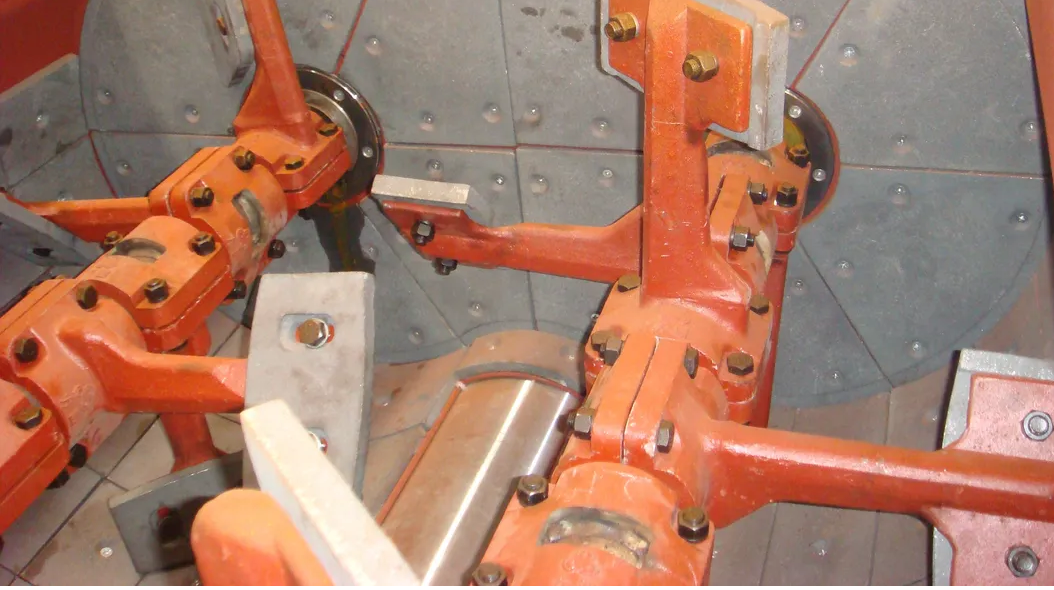
In commercial ready-mix concrete production and high-intensity roller-compacted concrete (RCC) projects, the twin-shaft mixer is the heart of the batching plant. However, it is also a hostile environment. Every day, mixer liners are subjected to severe, continuous abrasion from coarse aggregates (such as crushed granite, basalt, and quartz) combined with high-velocity corrosive chemical attack from cement slurries.
Unscheduled downtime due to liner wear-through is one of the single greatest operational expenditure (OPEX) drains for concrete plant operators. To mitigate this, choosing the correct wear-resistant metallurgy is critical.
This technical guide breaks down why Cr26 High-Chromium Cast Iron has become the global B2B industry standard for extending twin-shaft mixer liner lifespans, backed by metallurgical mechanics and return on investment (ROI) metrics.
Cr26 High Chromium Twin Shaft Mixer Liner Knowledge Graph
Cr26 high chromium cast iron liner is widely used in twin shaft concrete mixers due to its balanced performance between hardness and impact resistance.
However, its service life is not a fixed number. It is a system-level wear result influenced by material, equipment, and working conditions.
In real batching plant operation, Cr26 liner lifespan typically ranges:
- 400–800 hours (high-abrasion conditions)
- 800–1500 hours (standard concrete production)
- 1500–2500+ hours (low-abrasion mortar systems)
Cr26 Material Structure and Wear Resistance Principle
Cr26 is a high chromium cast iron material with a carbide-rich microstructure.
Typical composition:
- Chromium (Cr): 24–28%
- Carbon (C): 2.8–3.2%
- Hard phase: Cr7C3 carbides
- Hardness: HRC 58–65
Wear resistance mechanism:
- Carbides resist micro-cutting from sand particles
- Martensitic matrix absorbs mechanical impact
- Composite structure improves abrasion resistance in mixing environments
Cr26 is designed for continuous abrasive + impact loading conditions, making it suitable for concrete batching systems.
Real-World Lifespan in Twin Shaft Concrete Mixers
Cr26 liner lifespan depends heavily on aggregate type and mixing intensity.
Field performance data:
| Working Condition | Aggregate Type | Lifespan |
|---|---|---|
| Heavy duty mining concrete | Granite + high quartz sand | 400–800 hours |
| Standard commercial concrete | Mixed aggregates | 800–1500 hours |
| Precast low-abrasion production | Limestone / mortar | 1500–2500+ hours |
In practice, wear does not occur linearly. Instead, it accelerates after the mid-service stage due to surface fatigue and edge erosion.
Wear Mechanism in Concrete Mixing Environment
Cr26 liner wear is caused by combined mechanical actions inside the mixer.
1. Abrasive Wear
High-silica sand particles act as micro-cutting tools, gradually removing surface material.
2. Impact Fatigue
Repeated collision between mixing blades and liner surface creates localized stress concentration.
3. Sliding Friction Wear
Continuous shear movement of concrete mixture causes surface polishing and thinning.
4. Edge Spalling
The most common failure mode, caused by combined impact and abrasion at liner boundaries.
Failure Modes of Cr26 Liner
In real maintenance records from batching plants, Cr26 liners typically fail in the following patterns:
1. Surface Abrasion
Gradual thickness reduction due to continuous sand friction.
2. Edge Cracking and Spalling
Localized material loss at high-impact zones.
3. Bolt Hole Fatigue
Vibration-induced stress leads to fastener area cracking.
4. Micro-Crack Propagation
Internal fatigue develops under long-term cyclic loading.
Factors Affecting Cr26 Liner Lifespan
Aggregate Hardness
Quartz content above 25–30% significantly increases wear rate.
Mixing Speed and Load
Higher rotation speed increases impact energy inside the mixer chamber.
Water-Cement Ratio
Low water ratio mixtures increase internal friction and abrasion.
Blade Clearance
Improper clearance between blades and liner leads to localized accelerated wear.
Recommended clearance: 3–8 mm depending on mixer model
Cr26 vs Other Wear-Resistant Materials
| Material | Wear Resistance | Impact Resistance | Application |
|---|---|---|---|
| Cr20 | Medium | High | General concrete |
| Cr26 | High | Medium | Standard batching plants |
| Cr30 | Very High | Low | High-abrasion mining |
| Ceramic Composite | Extreme | Low | Special industrial use |
Cr26 remains the most widely used balanced solution for general concrete production plants.
Comparative Analysis: Cr26 vs. Alternative Materials
| Material Type | Typical Hardness | Average Lifespan (Cubic Meters Mixed) | Primary Wear Failure Mode | Cost vs. Benefit Profile |
|---|---|---|---|---|
| Q235 / Mild Steel | 120-150 HB | < 15,000 m³ | Rapid grooving & total deformation | Low initial cost; unacceptable OPEX |
| High Manganese (Hadfield) Steel | 200 HB (up to 450 under impact) | 30,000 - 50,000 m³ | Flow deformation due to low initial hardness | Requires heavy impact to work-harden; poor for pure abrasion |
| Cr15 Low-Chromium Iron | 50-54 HRC | 60,000 - 80,000 m³ | Matrix failure under chemical attack | Moderate lifespan; prone to brittle cracking |
| Cr26 High-Chromium Iron | 58-65 HRC | 120,000 - 180,000+ m³ | Gradual, predictable uniform wear | Highest initial cost; lowest TCO per m³ |
Maintenance Strategy to Extend Service Life
Recommended inspection cycle:
- Every 200 hours: visual inspection
- Every 300 hours: bolt tightening check
- Every 500 hours: thickness measurement
- Replacement threshold: 30–40% wear loss
Optimization practices:
- Improve aggregate grading curve
- Avoid dry overload mixing
- Maintain stable batching load
- Rotate liner position if design allows
Proper maintenance can extend service life by 30–60% in real plant conditions.
Internal Knowledge Graph Links
This page is part of the Cr26 wear system cluster:
Material Cluster
- Cr20 High Chromium Liner Lifespan
- Cr30 Ultra Hard Alloy Wear Plate
- High Chromium Cast Iron Structure Guide
Equipment Cluster
- Twin Shaft Concrete Mixer Maintenance Guide
- Concrete Batching Plant Wear Parts System
- Mixer Blade Wear Analysis
Failure Cluster
- Abrasive Wear vs Impact Wear in Concrete Systems
- Concrete Mixer Blade Failure Causes
- Industrial Wear Mechanism Comparison
Engineering Insight Summary
Cr26 liner performance is determined by a multi-factor system:
- Material hardness (Cr7C3 carbide density)
- Aggregate abrasiveness (SiO₂ content)
- Mechanical impact energy inside mixer
- Equipment operating parameters
- Maintenance discipline
Cr26 liner lifespan is therefore a system interaction result, not a fixed value.
Financial ROI: Calculating Capital Expense (CAPEX) vs. Operating Expense (OPEX)
For a commercial concrete plant operating a 3-m³ twin-shaft mixer (e.g., producing 100,000 m³ of concrete annually), let’s look at the financial impact of utilizing Cr26 over standard manganese liners.
Scenario A: Low-Alloy Manganese Liners
- Initial Cost: $1,500 per set.
- Lifespan: 40,000 m³.
- Replacements needed per year: 2.5 sets.
- Downtime Cost: 3 days total loss of production (calculated at $4,000/day in lost concrete delivery contracts) = $12,000.
- Total Annual OPEX Cost: $3,750 (parts) + $12,000 (downtime) = $15,750.
Engineering Best Practices to Prevent Cr26 Liner Cracking
While Cr26 offers unparalleled wear resistance, its high hardness makes it inherently brittle compared to structural steel. To avoid catastrophic fracturing during installation or operation, engineering crews must follow three strict protocols:
- Enforce Flat Shell Mating: Ensure the inner steel drum wall of the twin-shaft mixer is thoroughly cleared of old concrete residue before bolting down new Cr26 tiles. Any uneven gaps create a bending stress point. When high-tensile bolts are tightened, the unbacked tile will snap.
- Utilize Shock-Absorbing Backing Strips: Always install heavy-duty rubber or polyurethane damping sheets between the mixer shell and the Cr26 liner plates. This absorbs structural vibrations and aggregate impacts, shielding the brittle cast iron.
- Strict Torque Specification Compliance: Tighten liner countersunk bolts uniformly using a calibrated torque wrench to the exact manufacturer specifications (typically 180-220 Nm depending on bolt grade). Over-torquing is a primary cause of corner cracking on brand-new installations.
FAQ
Q1: What is the real lifespan of Cr26 mixer liner?
Typically 400–2500 hours depending on working conditions and aggregate hardness.
Q2: Why does Cr26 wear faster in quartz sand?
Quartz acts as a micro-cutting abrasive under high shear and impact conditions.
Q3: Is Cr30 always better than Cr26?
Not always. Cr30 is harder but has lower impact resistance in dynamic mixing environments.
Q4: What is the most common failure mode?
Edge spalling caused by combined impact and abrasive wear.
Q5: Can maintenance extend liner life?
Yes. Proper maintenance can extend service life by up to 60%.
Summary
Choosing Cr26 High-Chromium Cast Iron for twin-shaft mixer liners is an optimization strategy driven by metallurgy and financial logic. By locking in a microstructure saturated with hard M₇C₃ eutectic carbides supported by a tough martensitic matrix, ready-mix operators successfully neutralize cutting abrasion and cement slurry corrosion. The results are clear: predictable wear life, minimal maintenance windows, and a significantly lower overall cost per cubic meter of concrete produced.
If you need help auditing your plant's wear component sourcing or require custom material testing specifications for an upcoming factory order, please reach out to our team at [email protected].
Request Technical Blueprints & Factory Quotes
Submit your machinery parameters below. Connect directly with verified, certified heavy industrial manufacturers to receive custom foundation drawings, layout schematics, and direct-from-factory pricing.